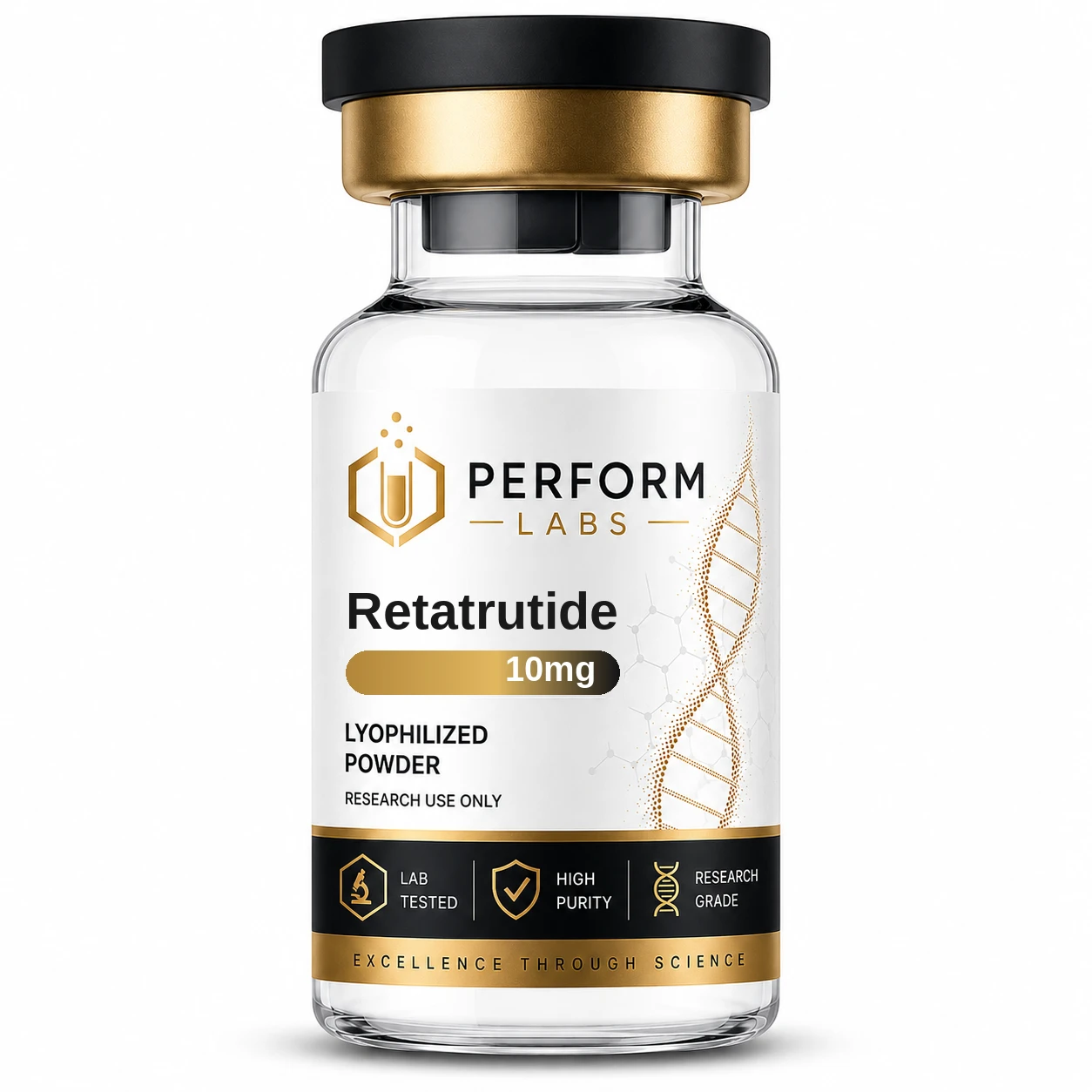
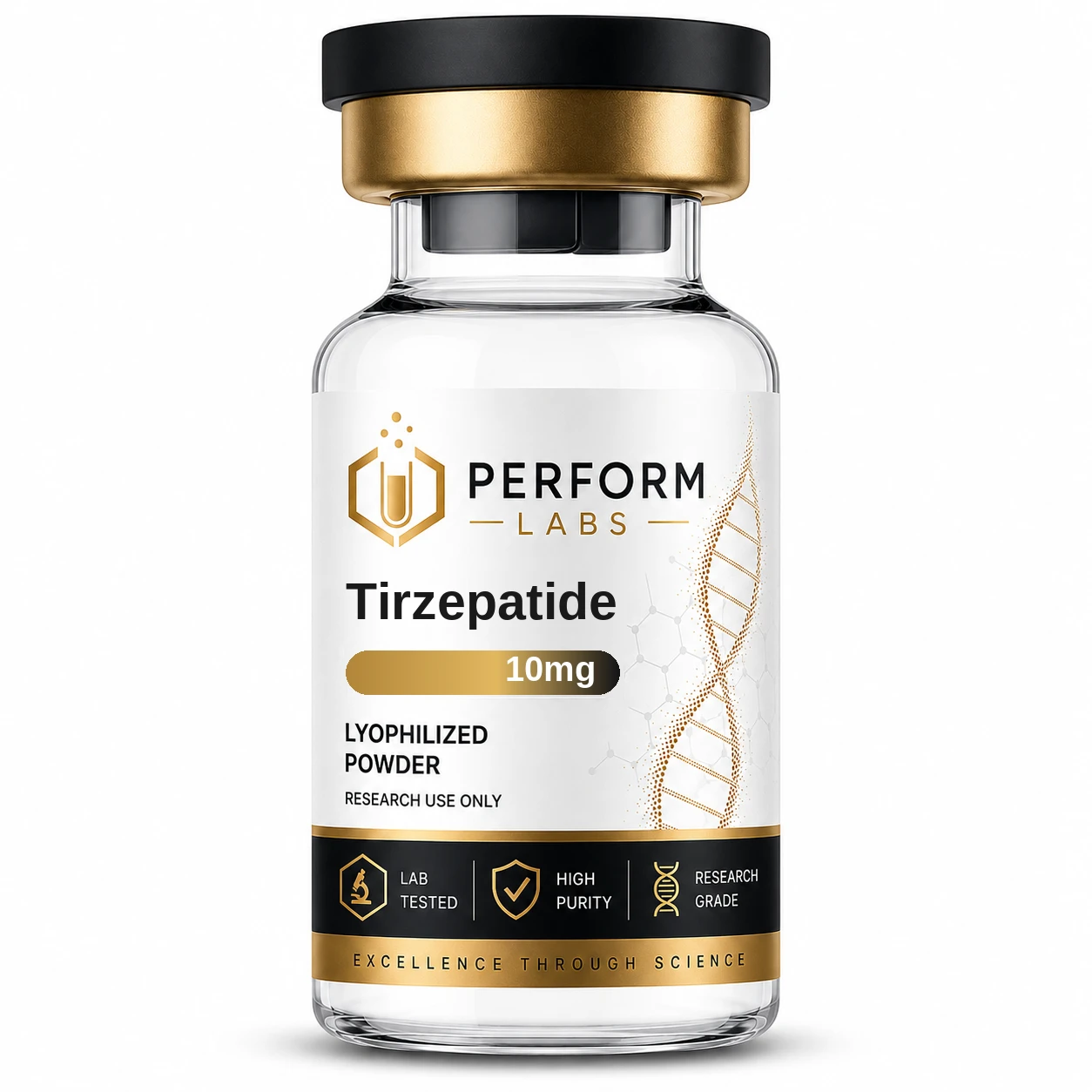
How Retatrutide, Tirzepatide and Semaglutide differ mechanistically, structurally and in the published research record — a comparison built for Australian research teams.
Retatrutide, Tirzepatide and Semaglutide are the three incretin-class peptides generating the most research interest in Australia right now, and they are frequently confused because all three are dosed weekly, all three are derived from the GLP-1 family of receptor biology, and all three appear in overlapping metabolic-research literature. But they are structurally distinct molecules with different receptor targets, different molecular weights, and different published data sets. This comparison is built for research teams deciding which compound — or combination of comparative arms — fits a given study design.
Receptor targets at a glance
| Compound | Receptor Targets | Class |
|---|---|---|
| Semaglutide | GLP-1 (mono-agonist) | Single receptor |
| Tirzepatide | GIP + GLP-1 (dual agonist) | Dual receptor |
| Retatrutide | GIP + GLP-1 + Glucagon (triple agonist) | Triple receptor |
The addition of each receptor target is not incremental branding — it changes the downstream signalling picture that researchers are modelling. Semaglutide's mechanism is confined to GLP-1-mediated insulinotropic and satiety pathways. Tirzepatide layers GIP receptor engagement on top, which the published SURPASS and SURMOUNT literature associates with a materially different metabolic response curve. Retatrutide's addition of glucagon receptor agonism introduces an energy-expenditure component that is structurally absent from the other two.
Molecular weight and structural identity
| Compound | Average Molecular Mass | Backbone |
|---|---|---|
| Semaglutide | ≈ 4113.6 Da | 31-amino-acid GLP-1 analog |
| Tirzepatide | ≈ 4813.45 Da | 39-amino-acid GIP-based analog |
| Retatrutide | ≈ 4731 Da | Modified GIP-based triple-agonist backbone |
These figures matter operationally: they are the numbers a lab checks against LC-MS output on a Certificate of Analysis. A batch reporting a mass more than a fraction of a dalton off the theoretical value for its labelled compound should be treated as a documentation failure, not a rounding artefact.
Published research data comparison
Semaglutide has the longest published research history of the three, with data extending back through the SUSTAIN and STEP trial programs. Tirzepatide's SURPASS and SURMOUNT literature is now similarly extensive. Retatrutide's public data set is comparatively young — centred largely on a single widely cited Phase 2 dose-ranging publication — which is an important caveat for research teams treating any of these compounds as a benchmark: the depth of literature available differs meaningfully across the three.
Half-life and dosing interval
- Semaglutide: approximately 7 days, supporting once-weekly reference dosing in the literature.
- Tirzepatide: approximately 5 days, also supporting a once-weekly reference interval.
- Retatrutide: approximately 6 days, again consistent with weekly reference intervals reported in Phase 2 data.
Reconstitution and storage — is there a difference?
Operationally, the three compounds are handled almost identically in a research setting. All are supplied lyophilised, reconstituted with bacteriostatic water using slow addition to avoid foaming, and stored at -20°C prior to use. Reconstituted material for all three is generally documented as stable for approximately 30 days under refrigeration at 2–8°C. The practical difference for a lab running comparative arms is simply keeping vials clearly labelled and aliquoted separately to avoid cross-contamination during a multi-compound study.
Choosing between them for a study design
- If the research question is specific to GLP-1 mono-agonism, Semaglutide remains the most extensively documented reference compound.
- If the study is modelling dual-incretin signalling against a very large published data set, Tirzepatide offers the deepest comparative literature.
- If the research question concerns triple-receptor or glucagon-linked energy-expenditure signalling, Retatrutide is currently the only widely available compound covering that mechanism.
- Comparative studies often run two or three arms side by side — in which case documentation consistency (identical COA standards across all compounds) becomes the priority sourcing criterion.
Frequently asked research questions
Which of the three has the largest published data set?
Semaglutide has the longest-running published literature, followed by Tirzepatide. Retatrutide's public data set is comparatively newer and smaller, centred on Phase 2 publications.
Are Retatrutide, Tirzepatide and Semaglutide interchangeable in a study?
No — they target different receptor combinations and have different molecular weights, so they are not interchangeable; each should be treated as a distinct research variable.
Do all three require the same reconstitution approach?
Yes, operationally they are handled the same way: lyophilised powder reconstituted with bacteriostatic water and stored under refrigeration once mixed, though each has its own COA-documented stability window.
Can these three compounds be sourced with matching documentation standards?
Yes. Perform Labs applies the same 99%+ HPLC-MS verification and per-batch Certificate of Analysis standard across all three, which simplifies documentation for comparative research designs.